Do you ever look at your bank balance and wonder where all your money went? You’re not alone. Most people spend small amounts daily without noticing — coffee, takeout, or that extra streaming service.
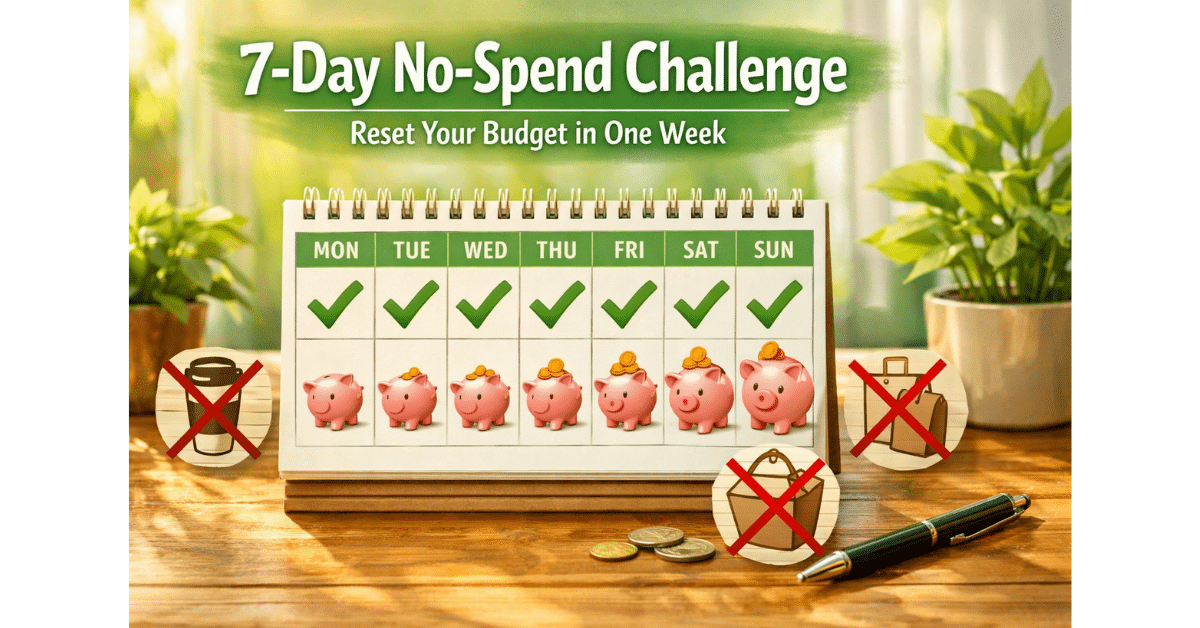
A 7-day no-spend challenge is a short, practical way to reset those habits. In just one week, you’ll see where your money leaks and kickstart a more intentional approach to spending. This guide will walk you through how it works, step-by-step, and how to make it fun — not restrictive.
What Is a No-Spend Challenge?
A no-spend challenge means you avoid unnecessary spending for a set period — typically a week, month, or even longer. You still pay for essentials like rent, groceries, and bills, but skip non-essentials.
Think of it as a “money detox.” It helps you pause impulsive purchases, realize what truly matters, and discover new free or low-cost ways to enjoy life.
How to Start the 7-Day No-Spend Challenge
1. Define Your “Essentials”
Before starting, list what must stay in your budget — things like groceries, medication, and transportation.
Avoid unnecessary categories like new clothes, takeout, or online shopping. If it’s not essential for survival or work, it’s off the list.
2. Set Clear Boundaries
A challenge only works with rules. Write down what you’ll say no to — for instance, “no delivery meals” or “no Amazon purchases.”
You can also plan exceptions if needed — say, a pre-booked event or gift you already committed to. Clarity helps you stay motivated.
3. Use a Spending Tracker
Write down or use an app to track your daily spending. Even if you buy nothing, note that too. This visual progress helps keep you accountable.
Many people use budgeting frameworks like the 50/30/20 rule to understand how their money is normally allocated — making it easier to see what can be cut back.
4. Plan Free or Low-Cost Activities
You don’t have to sit at home bored. Try no-cost activities such as:
- Reading or finishing a show you already subscribe to
- Exploring local parks
- Decluttering your house
- Cooking meals from your pantry
This challenge is about enjoying what you already have, not adding restrictions.
5. Reflect Each Day
At the end of every day, write a quick note: What did I avoid spending on today? How did it feel?
By Day 7, you’ll start noticing triggers — maybe stress, social media, or boredom — that make you spend unconsciously.
What to Do After the Challenge
Completing the challenge isn’t the finish line — it’s a reset button. Here’s what to do next:
- Review what expenses felt easiest to give up.
- Create a weekly or monthly budget based on what you learned.
- Test other save money hacks for everyday use.
You might even stretch your no-spend period to 14 or 30 days once you see results.
Key Takeaways
- The 7-day no-spend challenge helps you reset spending habits fast.
- Focus only on essentials — pause all non-essential buys.
- Track your expenses daily for better awareness.
- Find free or low-cost ways to enjoy your week.
- Review your spending triggers and keep long-term goals in sight.
Frequently Asked Questions
Q1: Can I buy groceries during a no-spend challenge?
A: Yes, groceries are considered essential. Just avoid impulse buys or extras not on your list.
Q2: What if I accidentally spend?
A: Don’t stress. Reflect on what happened, reset the next day, and keep going. Progress matters more than perfection.
Q3: How much can I realistically save in a week?
A: Depending on your habits, you could save anywhere from $50 to $150 — money that normally slips through small daily purchases.
Q4: Should I include bills in the challenge?
A: No, bills and fixed costs continue as usual. The challenge targets voluntary, unnecessary spending only.
Q5: What’s next after 7 days?
A: You can repeat the challenge monthly or transition into a broader budgeting method like the 50/30/20 rule for more structure.
Disclaimer: This article is for informational purposes only and is not financial advice. Always consider your personal financial situation before making budgeting decisions.