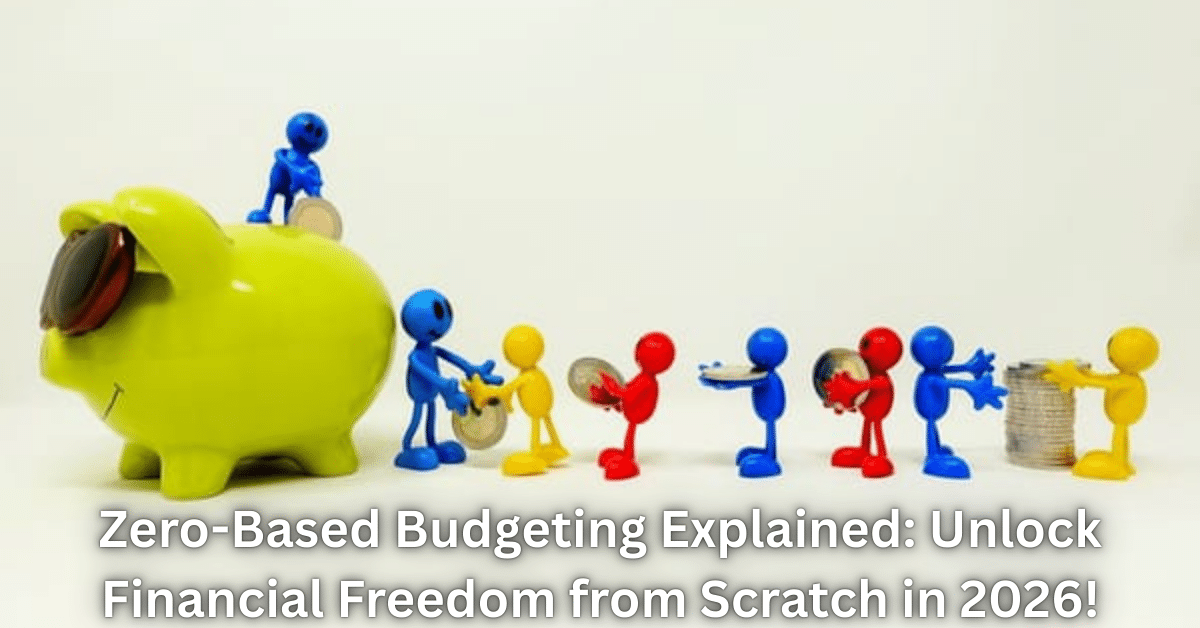
Zero-based budgeting explained revolutionizes how you handle money by requiring you to justify every expense from zero each month. Unlike traditional methods where last month’s budget rolls over, this approach ensures no dollar sits idle – every rupee or dollar gets a purpose, driving massive cost savings ZBB experts rave about.Imagine starting fresh every 30 days, building a monthly budget example that aligns perfectly with your goals. Popularized in the 1970s by Peter Pyhrr and now supercharged by AI budgeting tools, zero-based budgeting is booming in 2026.
Key Highlights
- Core Concept: Zero-based budgeting assigns every rupee/dollar a job from scratch monthly, hitting zero balance – no leftovers or rollovers.
- Top Benefits: 15-25% savings boost, uncovers hidden leaks (e.g., ₹2K coffee splurges), aligns funds to goals like EVs or AI courses.
- Simple Steps: Calculate income → List fixed/variable expenses → Allocate goals → Track with apps → Adjust to zero.
- Sample ₹60K Budget: Rent (18K), Groceries (8K), Savings (10K) – full table drives clarity.
- AI Power-Up: Tools like Drivetrain, YNAB, forecasting, and cuts for 2026 efficiency.
- Real Impact: Freelancers save ₹15K/month; businesses slash 10-30% costs – perfect for Indore tech pros.
What is Zero-Based Budgeting Explained in Simple Terms?
Zero-based budgeting explained means treating your income like a blank slate. You list all income sources – salary, freelance gigs, side hustles – then subtract exact expenses until you hit zero. No “whatever’s left” category; budgeting from scratch demands intentionality.
For instance, if you earn ₹50,000 monthly in Indore, allocate it fully: ₹20,000 rent, ₹10,000 groceries, ₹5,000 transport, ₹5,000 debt payoff, ₹5,000 savings, and the rest to fun or investments. This zero based budget eliminates waste, with studies showing up to 20% cost reductions in personal and business use.
Why Zero-Based Budgeting Explained Beats Traditional Budgeting
Traditional budgets often inflate year-over-year, breeding complacency. Justify every expense with zero-based budgeting explained – prove its necessity or cut it. This method shines for families, freelancers, and AI-driven businesses optimizing costs.
Benefits explode in clarity:
- Spot Hidden Leaks: Uncover ₹2,000 monthly coffee splurges turning into savings.
- Boost Savings: Users report 15-25% more tucked away monthly.
- Goal Alignment: Direct funds to dreams like buying an electric scooter or AI course.
In India, with rising costs in cities like Indore, cost savings ZBB helps stretch salaries amid 6-8% inflation. Pair it with ways to save $200 this month with AI for compounded wins ( save $200I).
Step-by-Step: Zero-Based Budgeting Explained for Beginners
Ready to implement? Follow this monthly budget example tailored for 2026 tech-savvy users.
- Calculate Income: Tally net pay. Include bonuses, rentals – aim for accuracy.
- List Fixed Expenses: Rent, bills, loans. Be ruthless; negotiate where possible.
- Add Variables: Groceries, fuel, dining. Use last month’s data as a baseline.
- Allocate Goals: Emergency fund (3-6 months expenses), retirement, vacations.
- Assign Flexible Spending: Entertainment, hobbies – fill to zero.
- Track Daily: Apps sync transactions, alerting deviations.
Expense tracking apps like PocketGuard or Goodbudget automate this. For businesses, Oracle Zero details enterprise scaling.
Here’s a sample zero based budget for ₹60,000 income:
| Category | Amount (₹) | Notes |
|---|---|---|
| Rent | 18,000 | Fixed |
| Groceries | 8,000 | Meal prep saves 20% |
| Transport | 4,000 | EV charging or bus pass |
| Utilities | 3,000 | Energy-efficient bulbs |
| Debt Repayment | 7,000 | Accelerate payoff |
| Savings/Invest | 10,000 | Mutual funds or PF |
| Dining Out | 3,000 | Weekly treat |
| Subscriptions | 2,000 | Audit AI tools |
| Fun/Misc | 5,000 | Gym, movies |
| Total | 60,000 | Zero balance achieved |
AI Budgeting Tools Supercharge Zero-Based Budgeting Explained
2026 brings AI budgeting tools transforming financial planning automation. Forget spreadsheets; AI handles the math.
- Drivetrain AI: Analyzes patterns, suggests cuts – perfect for ZBB pros.
- Generative AI Prompts: ChatGPT crafts custom budget zero base plans: “Create a zero-based budget for a ₹70K salary with EV goals.”
- SuperAGI Tools: Top 2026 picks automate forecasting, justifying expenses via machine learning.
These integrate with expense tracking apps, predicting overruns. For content creators in Indore tracking SEO gigs, AI flags irregular freelance income seamlessly.
Challenges and Pro Tips for Zero-Based Budgeting Success
Budgeting from scratch takes 15-30 minutes monthly but pays dividends. Common pitfalls: underestimating variables or rigid categories. Solution? Build a 10% buffer initially, then tighten.
Experts recommend quarterly reviews. In AI businesses, ZBB pairs with automation to slash non-essential spends by 10-30%. Track progress visually – apps generate reports showing cost savings ZBB in real-time.
Pro Tip: Use voice AI like Grok for quick audits: “Review my zero-based budget against last month.”
Real-World Wins: Zero-Based Budgeting Explained in Action
Sarah, a Mumbai freelancer, adopted this post-2025 layoffs. She saved ₹15,000 monthly, funding an AI certification. Businesses like Unilever saved billions via ZBB revamps.In your life, start small: Try a weekly version. Results? Freedom from financial stress, every dollar working for you.
Frequently Asked Questions
What is the main difference between traditional and zero-based budgeting?
Traditional budgeting uses previous budgets as a starting point, making small adjustments. Zero-based budgeting starts from zero and requires a full justification for all expenses in every cycle.
Is zero-based budgeting suitable for individuals?
Yes, it is highly effective for individuals, especially those with variable income or those looking to gain control over their spending by giving every dollar a job.
Can zero-based budgeting work in a business with high growth?
Yes, ZBB acts as a growth booster by allowing businesses to reallocate funds from unproductive costs to high-potential, profitable, or strategic initiatives.
What are some tools to help with zero-based budgeting in 2026?
Spreadsheets (Excel/Google Sheets) are common for smaller setups. For more advanced needs, dedicated, AI-powered FP&A (Financial Planning & Analysis) tools are used to automate data collection and analysis.
Disclaimer: This article is for informational purposes only and is not financial advice. Always consider your personal financial situation before making budgeting decisions.