Introduction
If you feel like your money disappears faster than your paycheck arrives, you’re not alone. The good news? You don’t need a complicated budget or a second job to start saving more.
In this guide, you’ll find 25 easy and practical money-saving hacks you can start today—from trimming grocery bills to lowering utility costs and rethinking little daily habits that really add up.
Key Takeaways
- Start small. Even tiny daily changes make a big difference over time.
- Automate savings. Make it a habit, not a decision.
- Cook and plan. Food budgets are the easiest to overspend on.
- Track progress. Seeing results keeps you motivated.
- Review regularly. Reassess subscriptions, bills, and spending every few months.
- Stay consistent. Consistency beats intensity in money management.
Everyday Hacks to Cut Expenses
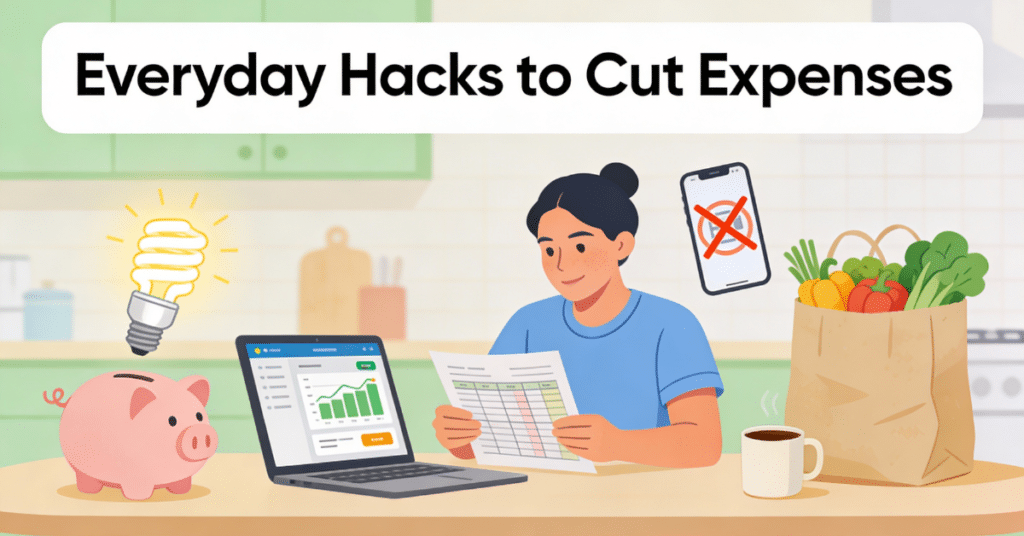
1. Track Every Dollar You Spend
Start by writing down or using a budgeting app to see where your money actually goes. This helps you spot unnecessary expenses and make quick changes.
2. Cancel Unused Subscriptions
Check your statements for streaming, app, or gym subscriptions you rarely use. Even canceling two or three can free up $20–$40 each month.
3. Set Auto-Transfers to Savings
Treat saving like paying a bill. Set up a small automatic transfer every payday—even $20 adds up over time.
4. Switch to Generic Brands
From groceries to household items, store brands often offer the same quality for much less.
5. Cook at Home More Often
Meal prepping or cooking just three extra dinners at home each week can save hundreds per month compared to dining out.
Smart Grocery & Food Savings
6. Shop with a List
A simple trick that works wonders. Lists prevent impulse buys and keep you focused.
7. Buy in Bulk (Smartly)
Stick to non-perishables or freezer-friendly items to avoid waste. Always compare unit prices for actual savings.
8. Use Coupon and Cashback Apps
Apps like Ibotta, Rakuten, or Honey can help you get cash back on groceries and online purchases.
9. Plan “Pantry Week” Dinners
Once a month, use what’s already in your kitchen to save on groceries and reduce food waste.
10. Limit Takeout to Once a Week
If you currently order food multiple times, start with one takeout day per week—it saves money and makes meals feel like a treat again.
Home and Utility Money Hacks
11. Unplug Devices Not in Use
Electronics still draw power even when off. Unplug chargers or use a smart power strip to reduce your electricity bill.
12. Swap Light Bulbs for LEDs
They last longer and use less energy. The savings show up on your bill within weeks.
13. Seal Window Gaps in Winter
A cheap DIY fix that keeps warm air in and reduces heating costs.
14. Wash Clothes in Cold Water
Cold washes clean just as well but save energy and preserve fabric.
15. Set Your Thermostat Wisely
Lowering your thermostat by just a few degrees can shave 10% off your energy bill.
Lifestyle & Mindset Shifts

16. Embrace Minimalism
Buy less, choose better. Owning fewer things means fewer expenses and less clutter.
17. Do Free Weekend Activities
Check out local parks, free museum days, or community events instead of costly outings.
18. Challenge Yourself with No-Spend Days
Pick one day a week where you spend nothing—no coffee, no shopping. You’ll be surprised how much you save.
19. Buy Used or Economical
From clothes to furniture, second-hand items often look new at a fraction of the cost.
20. Borrow Instead of Buying
For books, tools, or party supplies, see if you can borrow before purchasing.
Digital & Banking Tweaks
21. Use a High-Interest Savings Account
Even small balances grow faster with higher annual yields. Compare banks online for the best rates.
22. Set Price Alerts for Big Purchases
Wait for discounts before buying major items. Apps like CamelCamelCamel or Honey can track price drops.
23. Automate Bill Payments
Avoid late fees by scheduling automatic payments for utilities, rent, or credit cards.
24. Review Insurance Annually
Shop around every year—many people save hundreds simply by switching providers.
25. Round Up Purchases
Some banks automatically round up your purchases and save the difference. It’s effortless saving.
Frequently Asked Questions
Q1: What’s the easiest money-saving hack to start today?
A: Start by tracking your spending and canceling unused subscriptions. These two steps create instant results.
Q2: How can I save money on groceries fast?
A: Use a shopping list, buy store brands, plan meals around sale items, and avoid shopping when hungry.
Q3: Are cashback apps really worth it?
A: Yes—while savings may seem small at first, they compound over time, especially on groceries and essentials.
Q4: How do I stay motivated to keep saving?
A: Set clear goals (like a vacation or emergency fund) and celebrate small milestones along the way.
This article is for informational purposes only and not financial advice. Always consider your personal circumstances before making financial decisions.